The e-commerce landscape is undergoing a massive shift. Brands selling on Amazon are no longer relying solely on Amazon's internal search engine to drive sales. Instead, they are actively seeking external, off-Amazon traffic to boost their organic search rankings, build brand awareness, and increase their overall marketplace market share. For publishers, content creators, and media buyers, this presents an unprecedented monetization opportunity.
However, driving traffic is only half the battle. If you cannot conclusively prove that your content generated a specific sale, you cannot command the compensation your influence deserves.
Today, the standard for sophisticated performance partnerships has evolved. By mastering Amazon Attribution tags and campaign tracking, publishers can bridge the gap between their off-Amazon content and on-Amazon purchases.
What Are Amazon Attribution Tags?
Amazon Attribution is a proprietary advertising measurement solution built directly into the Amazon Ads console. It is designed to give registered brands insights into how their non-Amazon marketing channels impact shopping activity and sales performance on Amazon.
An Amazon Attribution tag is a parameterized URL, a specialized tracking link generated within this console. When a user clicks an Amazon Attribution tag on a publisher's blog, YouTube description, or social media profile, the tag drops a tracking cookie that monitors the user's journey once they land on the Amazon marketplace.
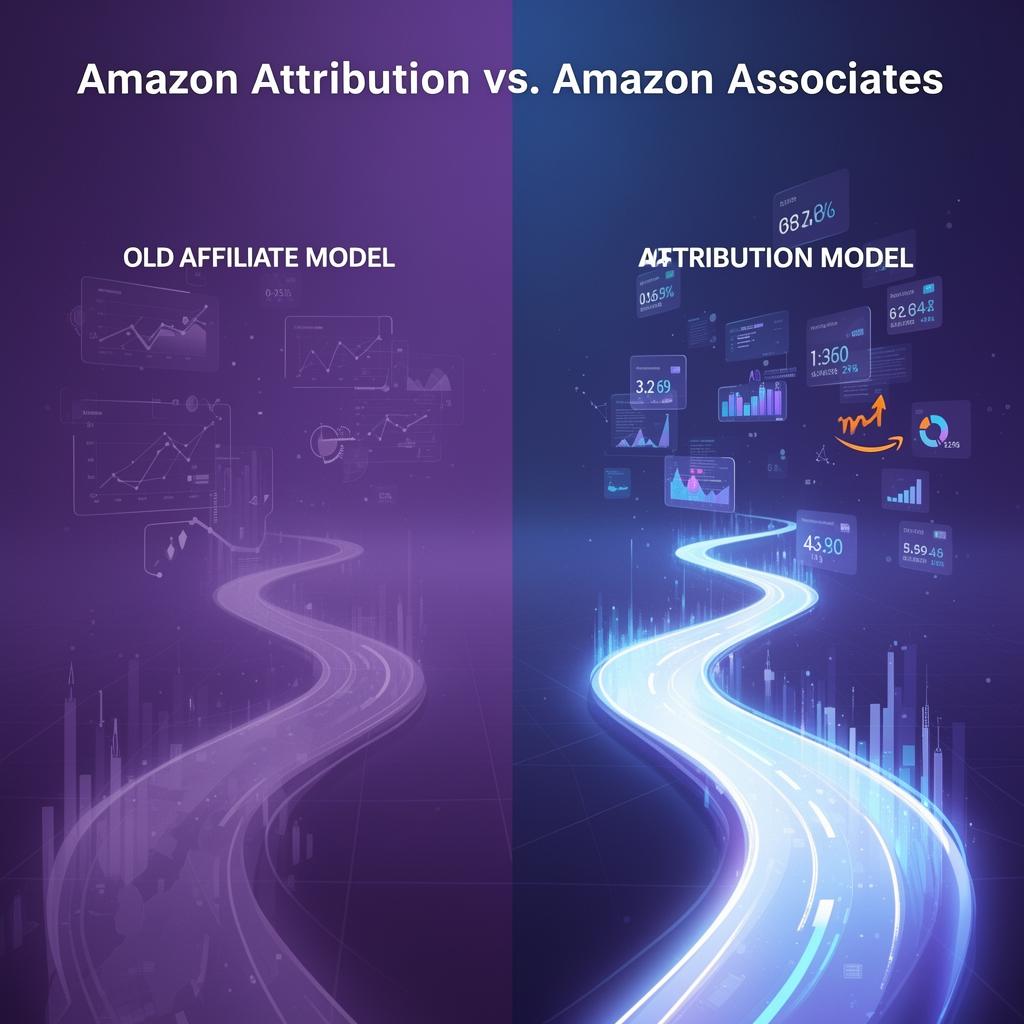
Amazon Attribution vs. Amazon Associates Links
- Amazon Associates: Owned by the publisher. Provides a flat, category-based commission (often 1% to 4%) within a strict 24-hour window.
- Amazon Attribution: Owned by the brand but utilized by the publisher. Offers a generous 14-day attribution window and tracks the Brand Halo effect, meaning if a customer clicks your link for one SKU but purchases a different product from the same brand within 14 days, the sale is tracked.
Because Amazon Attribution allows brands to accurately measure ROAS of external campaigns, it unlocks direct brand budgets and higher CPA commissions for publishers.
Why Campaign Tracking is a Game-Changer for Publishers
1. Proving Direct ROI to Brands
With proper campaign tracking, you can definitively state, "My product review article drove 10,000 Detail Page Views, 1,200 Add to Carts, and generated $45,000 in GMV for your brand."
2. Capitalizing on the Brand Referral Bonus (BRB)
Amazon rewards brands an average of 10% of the product price for every sale driven by non-Amazon marketing efforts tracked via Attribution. Brands use this bonus to fund higher performance-based commissions to publishers.
3. Un-Siloing E-Commerce Data
Campaign tracking un-silos the notoriously opaque Amazon ecosystem, feeding back vital metrics that allow publishers to optimize their content for better conversion rates.
Scale Your Marketplace Revenue
Join brands and creators using MaverickX to drive measurable sales through performance-based partnerships.
Step-by-Step: The Anatomy of Campaign Tracking Setup
Step 1: Defining the Campaign Hierarchy
A well-structured setup consists of:
- Campaign: The overarching initiative (e.g., Q4 Holiday Gift Guide 2026).
- Ad Group: Segmented by specific publisher or channel.
- Attribution Tag: The specific, clickable URL that maps precisely to a piece of content.
Step 2: Utilizing Publisher Sub-Tags and Parameters
Publishers should request distinct tags for distinct channels, utilizing UTM architecture:
- Source: The origin of the traffic (Instagram, TechBlog, Newsletter).
- Medium: The category (Social, Organic_Search, Email).
- Campaign: The specific promotion.
Step 3: Link Implementation and Redirection
Attribution URLs can be long. Publishers frequently run them through vanity URLs or redirect tools. Ensure any redirect executes a clean 301 server-side redirect so tracking data is passed seamlessly.
Strategic Placements: Optimizing Off-Amazon Content
Content Hubs and SEO-Driven Blogs
Long-form written content captures users at the bottom of the funnel. Implement Buy on Amazon buttons above the fold. Use comparison tables with dedicated tracking links for each product variant.
Social Media and Video Commerce
For YouTube, ensure the Attribution tag is in the first two lines of the video description. On Instagram, leverage Link in Bio aggregator trees with perfectly mapped Attribution tags.
High-Intent Email Newsletters
Create highly segmented product roundups with deep linking strategies that send users directly to product pages.
Performance Optimization: Reading Amazon Attribution Data
Key Metrics to Monitor
- Click-Throughs: Raw traffic volume generated.
- Detail Page Views (DPV): Shoppers who clicked and actually engaged with the Amazon listing.
- Add to Cart Rate: The percentage of DPV visitors who added the item.
- Purchase Rate: Final conversion. This is the metric that directly translates to your commissions.
- Halo Sales: Purchases of other products from the same brand within the attribution window.
Optimizing Based on Data
If your click-through rate is high but DPV is low, users are bouncing before the Amazon page loads. If DPV is high but Add to Cart is low, the listing itself may be underperforming. Share these insights with your brand partners to collaboratively improve conversion.
Ready to Prove Your ROI?
Connect with top marketplace brands. Track attribution. Earn more with data-driven partnerships.
Scaling with Performance Partnership Platforms
Managing Amazon Attribution tags across multiple brand partners and dozens of content placements can become operationally overwhelming. Platforms like MaverickX centralize the entire workflow: pre-configured tracking links, real-time conversion dashboards, and automated payment reconciliation. The platform handles brand-side setup, tag generation, and data aggregation, allowing publishers to focus on creating high-converting content.
Looking Ahead: GEO, AEO, and the AI-Powered Publisher
As AI search engines become the dominant discovery mechanism, publishers who optimize for Generative Engine Optimization (GEO) and Answer Engine Optimization (AEO) will see their content cited by AI models, driving highly qualified traffic. By ensuring every outbound link in your AI-optimized content is an Amazon Attribution tag, you capture the full conversion funnel of this new discovery paradigm.
The publisher who masters Amazon Attribution tags today is not just earning commissions; they are building a data-driven business that brands cannot live without. Start by requesting dedicated Attribution tags from your next brand partner, structure your campaigns with precision, and let the data tell the story of your value.
Keep Building
Related MaverickX Products
Marketplace Growth Platform
The all-in-one platform powering publisher activation, attribution, and performance-based marketplace growth.
Tour the MaverickX Marketplace Growth PlatformMaverickX Publisher Network
Activate a curated network of trusted publishers and creators to drive off-site traffic to your Amazon and Walmart listings.
Learn more about MaverickX Publisher Network
Continue Reading